 OSGFilms
The Official Media Space of Orlando S. Gondar
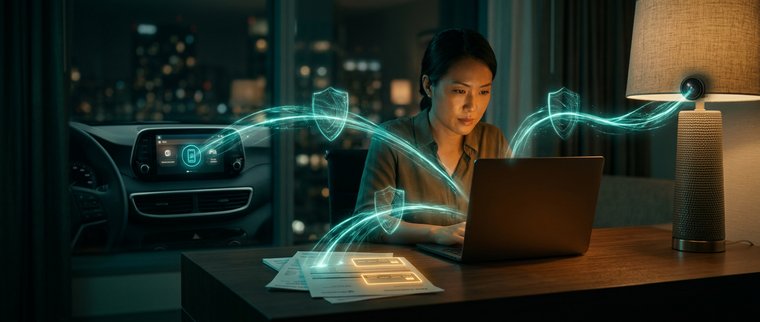
5 Real Ways People Are Using AI Right Now, Part 3
This is part of a series. Start with 5 Real Ways People Are Using AI Right Now.
Artificial intelligence is no longer an idea locked inside research labs. Everyday people are using it to work smarter, learn faster, and build things that once required an entire team. Here are five more examples.
These examples come from real online discussions. Each one shows a different way that AI has slipped into daily life, often paired with a familiar gadget.
1. Hidden camera detection

One traveler uses an AI-assisted detector to scan a rental room for hidden cameras before settling in. The device flags suspicious reflections and wireless signals, then a short AI summary explains which findings are worth worrying about and which are ordinary.
Detection is not the same as certainty. The check adds confidence, but a careful look around the room is still worth the extra minute.
2. Car troubleshooting from a photo

Instead of paying a shop for a second opinion, some owners photograph a dashboard warning light or an engine bay and ask an AI model what to check first. The model turns a vague worry into a short list of possibilities and simple tests.
It is best used as a starting point. When the answer points to brakes, airbags, or anything safety-critical, the next stop is still a qualified mechanic.
3. Finding a spy camera in a hotel

A guest described pointing a phone around a hotel room and letting an AI app analyze the footage for lenses, reflective glints, and objects that do not belong. What once required a specialist sweep now takes a short walk through the space.
A clean scan is reassuring, not a guarantee. Privacy-conscious travelers still cover or unplug the devices they find, especially the ones facing a bed or a bathroom.
4. A study tutor in conversation

Students use AI as a patient tutor that never gets tired of the same question. It explains a concept three different ways, generates practice problems, and marks the answers with feedback that points out exactly where the reasoning broke down.
Some learners now use it more than traditional tutoring subscriptions because it is available at midnight, before an exam, when panic is highest and other help is closed.
5. A baby-monitor app that listens

Parents describe baby-monitor apps that use AI to distinguish ordinary noise from a cry, a cough, or distress, then send a calmer, more specific alert instead of buzzing at every sound.
Fewer false alarms mean more rest. Parents still keep the monitor within reach and treat the app as support rather than a substitute for attention.
The takeaway
These uses are practical, low-drama, and quietly useful. AI works best here when it removes a small, repeated burden from a day and leaves the final decision with the person using it.
Which of these would you try yourself?